
Starting Preschool in Kraków Without Polish: A Guide for International Families
Moving to Kraków can bring a very practical question for parents: what happens if my child is ready for preschool but does not yet speak Polish?
For multilingual families, starting education in a new language can feel like a major transition. Language development, however, depends on a child’s experiences and exposure. Children learning more than one language do not all develop each language at the same rate, and strength in one language can differ from strength in another.
Your child does not need three identical languages
A multilingual child should not be expected to perform like three separate monolingual children. Vocabulary and other skills can be distributed across the languages a child hears and uses. The amount and quality of exposure to each language matter.
This means that a child who is new to Polish may initially rely more on a familiar home language while gradually building understanding and participation in the preschool environment. For a broader explanation of multilingual development, read what research says about whether several languages confuse young children.
Understanding can develop before confident speaking
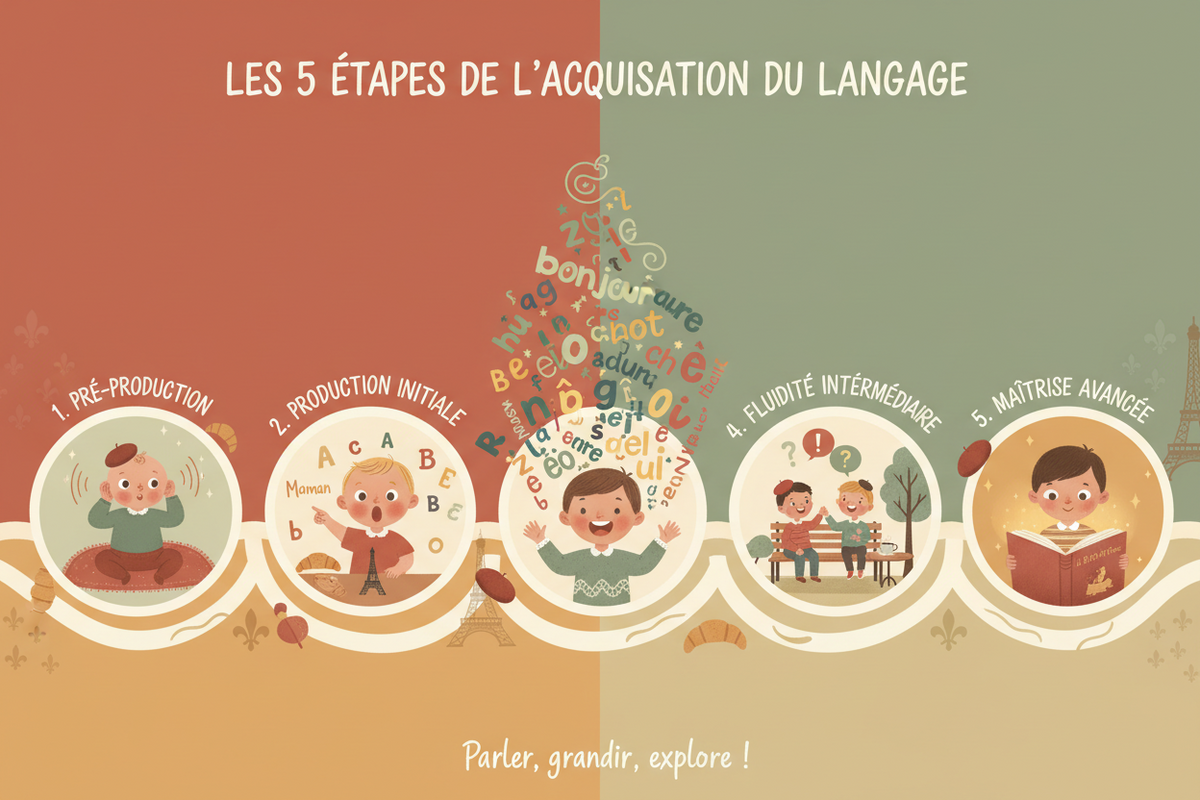
When children encounter a new language, adults should not measure progress only by how quickly the child begins producing long sentences. Communication can also be supported through familiar routines, gestures, visual context, stories, songs, play and interaction with adults and other children.
Parents should also avoid treating occasional language mixing as proof that a child is confused. Multilingual language development is variable, and language use reflects the child’s exposure, context and communication needs.
Should parents stop using the home language?
There is no good reason to abandon rich communication in the language your family speaks most naturally. Research and professional literature support the value of maintaining and developing a child’s home language, including for young dual-language learners.
At home, the priority can remain meaningful conversation: talking about the day, reading together, telling stories, singing, playing and giving the child opportunities to express ideas in the language or languages your family uses confidently.
What to ask a preschool in Kraków
If your child does not yet speak Polish, useful questions include:
- Which languages are used during the preschool day?
- How are new children helped to understand routines and activities?
- How are stories, songs, play and conversation used to support language development?
- How does the preschool communicate with multilingual families?
- What should parents do at home to support the child’s existing language or languages?
- How would the school respond if parents had concerns about speech or language development?
If you are comparing several schools, our international preschool in Kraków parent checklist gives a practical framework for comparing language environment, curriculum, location and admissions.
A French, English and Polish preschool environment in Kraków
At Maternelle Française de Cracovie, children aged 3–6 learn in a multilingual environment using French, English and Polish. Language is encountered through everyday preschool experiences including conversation, stories, songs, routines, activities and play.
The programme covers the French national curriculum and the Polish national curriculum, with English forming part of the multilingual environment. You can explore our French, English and Polish preschool curriculum before arranging a visit.
The school is located at Borkowska 3, lok. 11–12, Kraków and welcomes enquiries from Polish, French-speaking, international and multilingual families.
When a language concern needs specialist attention
Multilingualism itself should not be treated as a disorder. If parents are concerned about a child’s speech, understanding or language development, assessment should take the child’s complete language background into account rather than judging the child from only one language. A suitably qualified professional with experience of multilingual development can help distinguish differences associated with language experience from genuine communication difficulties.
Research behind this guide
This article is informed by peer-reviewed research and professional literature on multilingual preschool development, including:
- Durán LK, Hartzheim D, Lund EM, Simonsmeier V, Kohlmeier TL. Bilingual and Home Language Interventions With Young Dual Language Learners: A Research Synthesis. Language, Speech, and Hearing Services in Schools. 2016;47(4):347–371. doi:10.1044/2016_LSHSS-15-0030.
- Kohnert K, Yim D, Nett K, Kan PF, Duran L. Intervention With Linguistically Diverse Preschool Children: A Focus on Developing Home Language(s). Language, Speech, and Hearing Services in Schools. 2005;36(3):251–263. doi:10.1044/0161-1461(2005/025).
- Crowe K, Cuervo S, Guiberson M, Washington KN. A Systematic Review of Interventions for Multilingual Preschoolers With Speech and Language Difficulties. Journal of Speech, Language, and Hearing Research. 2021;64(11):4413–4438. doi:10.1044/2021_JSLHR-21-00073.
Considering preschool in Kraków?
If you are looking for a trilingual preschool for a child aged 3–6, you can read about admissions or contact Maternelle Française de Cracovie to arrange a visit.
Phone / WhatsApp: +48 537 008 386
Email: info@maternellefrancaisecracovie.pl
Address: Borkowska 3, lok. 11–12, 30-438 Kraków, Poland